
So you've just started hitting the gym, playing a sport regularly, or maybe you're just trying to eat better, and somewhere along the way, whey protein came up. Maybe a gym buddy mentioned it, or you saw an ad, or you're standing in a store right now staring at a wall of tubs wondering where to even begin.
If you're buying protein powder for the first time, it's easy to feel lost. Concentrate or isolate? How much protein should actually be in one scoop? Does it matter when you drink it? What's worth checking on the label? And how do you even know if what you're buying is legit?
Here's the reassuring part: none of this is as complicated as it looks once you break it down.
For beginners in India, what really matters is understanding what whey protein actually is, whether you even need it, how much protein your body requires, which type might work better for you, and how to size up a product before you hand over your money.
This guide walks through all of that.
What Is Whey Protein?
Whey protein comes from milk. When you make cheese from milk, you separate the milk into solid curds and a liquid by-product called whey. That liquid is then processed and filtered down into the protein powder you see on shelves.
Whey is a complete protein — it contains all nine essential amino acids that your body needs but can't make on its own.
If you exercise, these amino acids repair and rebuild your muscles. But protein isn't only about the gym. It's a basic nutrient your body needs anyway, to maintain muscle and other tissue.
At the end of the day, whey protein is just an easy way to increase your protein intake. It's not a steroid, not a medicine, and definitely not a shortcut to building muscle overnight. Your diet, training, sleep, and consistency still do the heavy lifting.
Do Beginners Actually Need Whey Protein?
Short answer: not necessarily.
This is probably the first myth beginners should drop. Whey protein is a supplement — it's optional, not a prerequisite for starting your fitness journey. You can get plenty of protein from regular food, like eggs, milk and curd, paneer, chicken and fish, soy, dal and beans, and other protein-rich foods.
If your everyday meals already give you enough protein, there's honestly no need to add a powder into the mix.
The real reason most people reach for whey is convenience. Say you're slammed with work or classes and can't always cook a protein-heavy meal after your workout — a scoop of whey becomes a quick fix instead of preparing another full meal.
So rather than asking "Do I need whey because I joined a gym?", ask yourself: "Am I actually getting enough protein from what I eat every day?"
If the answer is no, that's where whey can help close the gap.
Why Do People Actually Use Whey Protein?
Whey really shines when convenience is the deciding factor. Common reasons people use it include: topping up daily protein intake, convenient nutrition post-workout, making it easier to hit personal protein targets, adding protein to breakfast or a snack, and supporting an active lifestyle.
But here's the key point — whey is meant to complement your diet, not replace it.
How Much Protein Does a Beginner Actually Need?
There's no magic number that applies to everyone. Your needs shift based on body weight, age, activity level, how often you train, your fitness goals, and your overall diet. People doing regular resistance training or intense physical activity generally need more protein than those who are mostly sedentary.
How Much Whey Should a Beginner Actually Take?
There's no rule saying every beginner needs exactly one, two, or three scoops a day. Start by looking at your diet first. If your food already meets your protein needs, you might not need whey daily at all. Always read the nutrition label instead of assuming "one scoop" is the same thing everywhere.
How to Choose Whey Protein for the First Time
Instead of grabbing a tub because of the flavour, a flashy discount, or a big number on the front, flip it around and actually read the label.
- 1. Check Protein Per Serving — Look at the nutrition panel for the actual protein content per serving. "25g protein" sounds great, but that number means nothing without knowing the serving size.
- 2. Look at Protein Per 100g — This number makes comparisons much easier across brands that use different serving sizes.
- 3. Read the Ingredient List — The main protein source should be clearly listed. A clear ingredient list makes it easy to understand what you're buying.
- 4. Check Added Sugar — If you're watching your sugar intake, check the label for added sugar specifically.
- 5. Look for Relevant Certifications — Certifications add another layer of trust when an independent body is involved. Understanding what a certification actually covers matters more than just spotting the logo.
- 6. Check Authenticity — A genuine product should have clear batch information. If a brand offers a verification system, use it. Our step-by-step guide on how to verify a protein supplement in India covers each check, and you can verify authenticity of any ProTYM batch on our authenticity page.
- 7. Compare Cost Per Gram of Protein — Cost per gram of protein = Total price ÷ Total grams of protein in the tub. This gives you a fairer way to compare products with different serving sizes and protein levels.
ProTYM Whey Isolate: An Example Worth Looking At
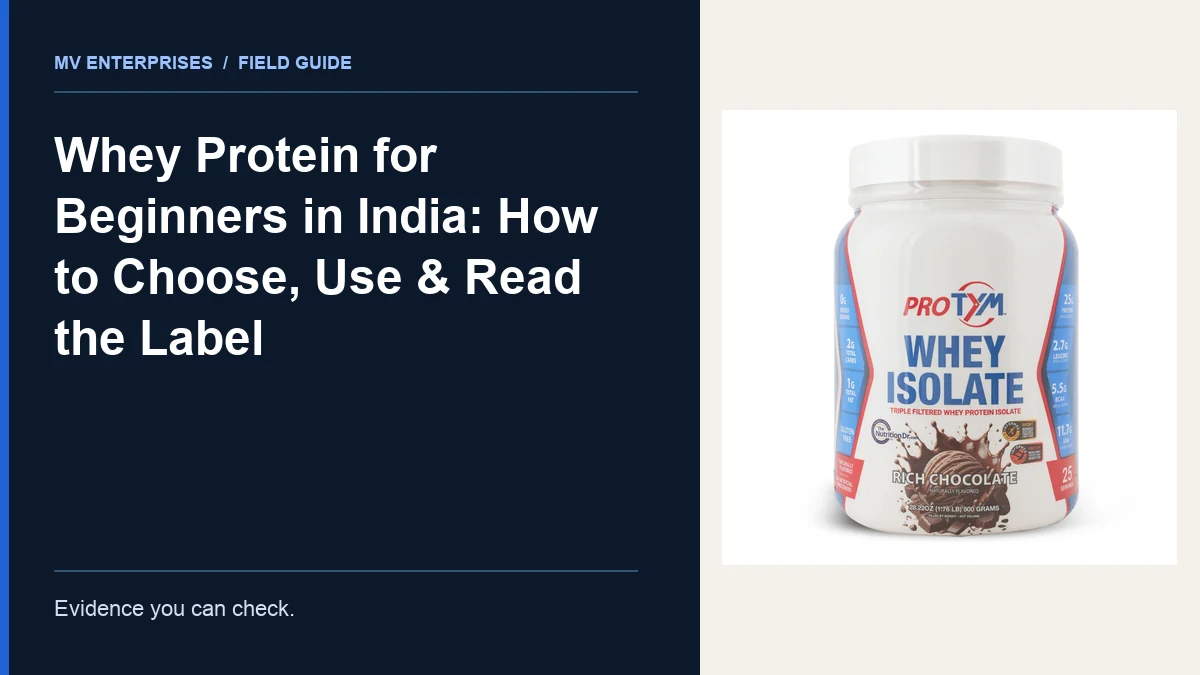
If you're comparing protein products, ProTYM Whey Isolate is a good example of the kind of information a buyer should be able to review before deciding. Its label states 25g protein per 30g serving with zero added sugar, and it carries Informed Sport and Informed Protein certifications.
The point isn't that every beginner needs this specific brand. It's about using products like ProTYM as a benchmark for what to look for — clearly stated protein numbers, understandable ingredients, relevant certifications, and a way to verify authenticity.
Frequently Asked Questions
Is whey protein safe for beginners? For most healthy adults, yes — it's a convenient protein source. But individual tolerance and health conditions matter, so anyone with allergies or medical concerns should check with a professional first.
How much whey protein should a beginner take? There's no fixed number of scoops. Start by evaluating how much protein you're already getting from food. A typical serving offers around 20–30g of protein, but always confirm this on the actual product label.
Should I take whey protein every day? That depends entirely on your diet. If you're consistently falling short on protein, daily use might help.
Should I take whey before or after a workout? Either works fine. What actually matters more is your total protein intake across the day.
Can I take whey protein if I don't go to the gym? Sure. Whey is simply a protein source, not something exclusive to gym-goers.
Is whey isolate better than concentrate? Not necessarily. Isolate has a higher protein concentration and less lactose, fat, and carbs, while concentrate tends to be more budget-friendly. The right pick depends on your personal needs. For a full breakdown, read whey isolate vs whey concentrate.
How can I check if my protein powder is genuine? Look for batch details, buy from trustworthy sources like MV Enterprises, and use the brand's verification system if one's available.
This article is general educational information, not medical or dietary advice. ProTYM is imported and distributed in India by MV Enterprises.