
Why protein content mislabelling is still a problem in India, and how to protect yourself
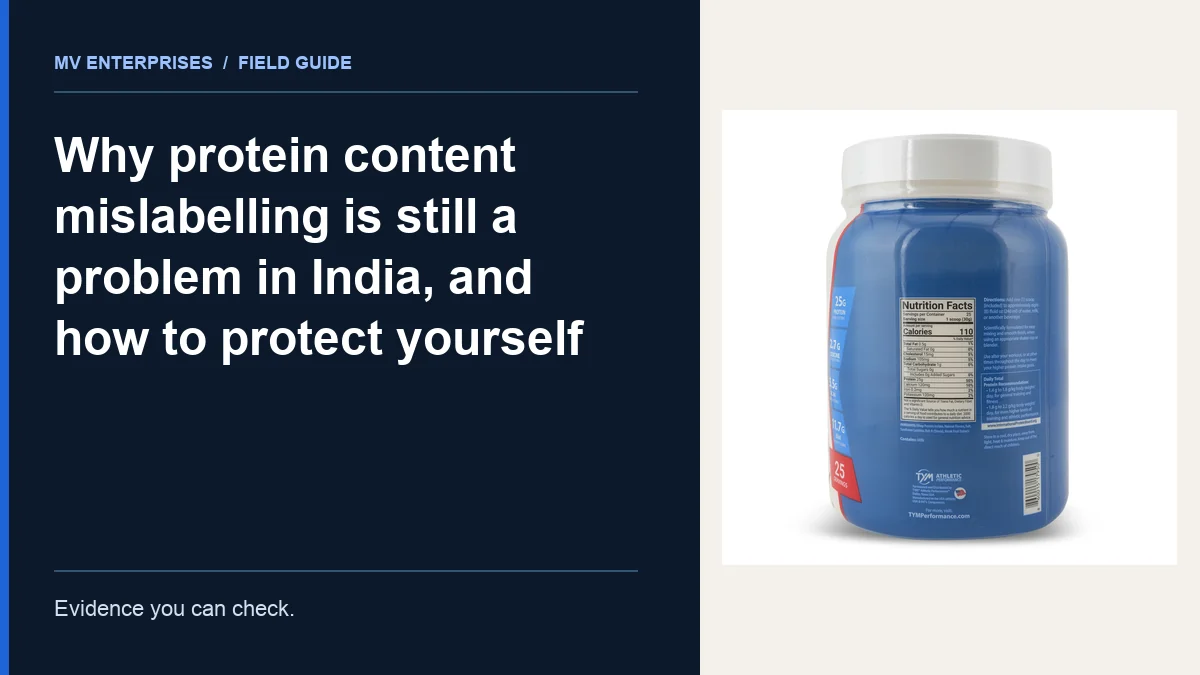
The trust problem in Indian sports nutrition is not a rumour. A 2020 independent study, the Citizens Protein Project, tested protein supplements sold in India and found that a large share were mislabelled, with issues ranging from incorrect protein content to undeclared additives and, in some samples, contaminants. The finding made one thing clear: the label alone cannot be trusted.
How mislabelling actually happens
Mislabelling is rarely a single trick. It tends to be a combination of cost-cutting choices that each move the product further from what the label promises:
- Nitrogen (amino) spiking: adding cheap nitrogen-rich compounds so a basic protein test reads high, without delivering complete protein.
- Under-filling the active: simply putting in less of the expensive protein than the label states.
- Undeclared additives: fillers, flavour systems, or sweeteners not properly disclosed.
- Contamination: heavy metals or banned substances picked up through raw materials or shared equipment.
Why it persists
Protein is one of the more expensive ingredients in a supplement, so there is constant commercial pressure to use less of it while keeping the headline number high. Where enforcement and independent testing are inconsistent, that pressure wins more often than it should. The result is a market where two tubs with identical label claims can be very different products.
What third-party testing actually solves
Independent, batch-level testing breaks the cycle because the brand no longer grades its own homework. When a finished batch is screened by an outside laboratory for both label accuracy and banned substances, the incentive to cut corners disappears, because the corners would show up in the report. Our explainer on what third-party certified actually means breaks down the two certifications that matter most.
How to protect yourself
You can shift the odds heavily in your favour with a few habits:
- Prefer products with genuine third-party certification (such as Informed Sport and Informed Protein), and verify the batch in the certifier's database.
- Ask for a batch-specific certificate of analysis, and check the batch number matches your tub — our guide covers how to read a certificate of analysis.
- Buy only through authorised channels so the seal and batch integrity are intact.
- Treat vague claims ("lab tested", "premium") as marketing until they are backed by verifiable evidence.
Where ProTYM fits
ProTYM was built specifically for this trust gap: dual third-party certification, full ingredient transparency, and batch-level certificates you can pull yourself. Imported to India by MV Enterprises, it is designed so that you never have to take the label on faith. To check the certifications and label for yourself, see ProTYM Whey Isolate.
This article is general educational information, not medical or dietary advice. ProTYM is imported and distributed in India by MV Enterprises.