
Whey Isolate vs Whey Concentrate: What's the Difference and Which Is Better?
Whey isolate vs whey concentrate is one of the most common questions people have when selecting protein powder. If you've ever looked at protein powder, you will have noticed that they are practically indistinguishable; however, the cost difference can be huge.
Then why is one more expensive? Does whey isolate truly offer more benefits or just the extra processing? Does it matter anyway if your objective is to build muscles or even shed weight or simply consume more protein?
The idea that 'isolate is better' is not the answer.
Before you start throwing your money down a hole in the ground to buy a tub, it's important to find out what you're getting, what benefits it adds and whether you actually need the benefits of whey isolate, or whether using whey concentrate will serve you just as well.
Whey Isolate vs Whey Concentrate: Quick Comparison
| Factor | Whey Concentrate | Whey Isolate |
|---|---|---|
| Protein concentration | Generally around 70–80% | Generally 90%+ |
| Processing | Less filtered | More highly filtered |
| Lactose | Higher | Lower |
| Fat | Generally higher | Generally lower |
| Carbohydrates | Generally higher | Generally lower |
| Price | Usually lower | Usually higher |
| Best suited for | Everyday protein and value | Higher protein density and tighter macros |
What is the Difference between Whey Isolate and Concentrate?
The simplified way to understand the process is: Milk → whey → filtration → whey concentrate → further filtration → whey isolate.
The key is that whey isolate is a more highly processed form of whey. Further processing results in the removal of a greater amount of the non-protein components, such as lactose, fat and carbohydrates. The protein content of typical whey concentrate is 70–80% of its dry matter, and a typical whey isolate is 90% protein or more. This is not to say that concentrate is inferior — it just indicates that the two forms have different nutritional properties.
7 Real Differences Between Whey Isolate and Concentrate
- 1. Protein Concentration — Typical whey concentrate is 70–80% protein by weight; whey isolate is typically 90% or greater. Always check the nutrition panel rather than simply relying on the word 'isolate' on the front of a tub. A label can also be inflated by amino spiking, so check the amino acid profile too.
- 2. Lactose Content — Whey concentrate has a higher lactose content than whey isolate. Isolate may be lower in lactose, making it a better choice for those who can't handle lactose — but do not refer to isolate as automatically lactose-free.
- 3. Fat and Carbohydrates — Whey concentrate tends to have a higher amount of fat and carbohydrates. This distinction matters more when you're closely monitoring your daily macros.
- 4. Calories — Isolate generally has a higher protein to fat and carbohydrate ratio, making it a slightly more protein-dense choice.
- 5. Muscle Building — Both concentrate and isolate can support muscle growth. The bigger question is whether you are getting enough overall protein and have a suitable resistance-training programme. Whey's amino acid profile, and especially its leucine content, is what drives that response; see our explainer on leucine and muscle protein synthesis.
- 6. Taste and Texture — Concentrate may taste creamier or richer. Isolate can have a lighter profile. Other ingredients, such as flavouring and sweeteners, can have a major impact on the flavour of any specific product.
- 7. Price and Value — Whey isolate tends to be more costly as it involves further processing. A more useful comparison is cost per gram of protein, not cost per tub.
Whey Isolate vs Concentrate for Different Goals
For General Fitness — If you're able to tolerate dairy and just need decent protein, whey concentrate might be a better option unless it's specifically necessary to reduce lactose, fat or carbohydrates.
For Muscle Gain — Both can help. Protein, resistance training, calories, recovery and overall diet are all critical to building muscle. Don't choose isolate purely because it's more expensive.
For Cutting or Weight Loss — Whey isolate may be handy when managing macros closely, as it typically contains a higher percentage of protein and fewer fat and carbs. But isolate is not a weight loss product.
For Lactose Sensitivity — A whey isolate may be easier to tolerate as it normally has less lactose. Individual tolerance must always be taken into consideration.
For Beginners — Whey concentrate may be ideal for a new dieter who just needs a convenient and inexpensive protein source. Isolate isn't necessary just because you're starting out.
For a Limited Budget — Whey concentrate is typically the cheaper option. High-quality whey protein doesn't have to be expensive.
For Maximum Protein Density — Whey isolate usually has the edge when it comes to providing a high percentage of protein in a single serving.
Final Verdict
Whey isolate and whey concentrate are not "good" or "bad" forms of whey — they are two types of the same protein found in milk but treated differently. The right choice depends on your objectives, stomach, eating routine, and budget.
Before purchasing either, check past the word "isolate" or "concentrate" — read the label, compare actual protein content, know what you're getting. Our guide on how to verify a protein supplement covers those checks step by step.
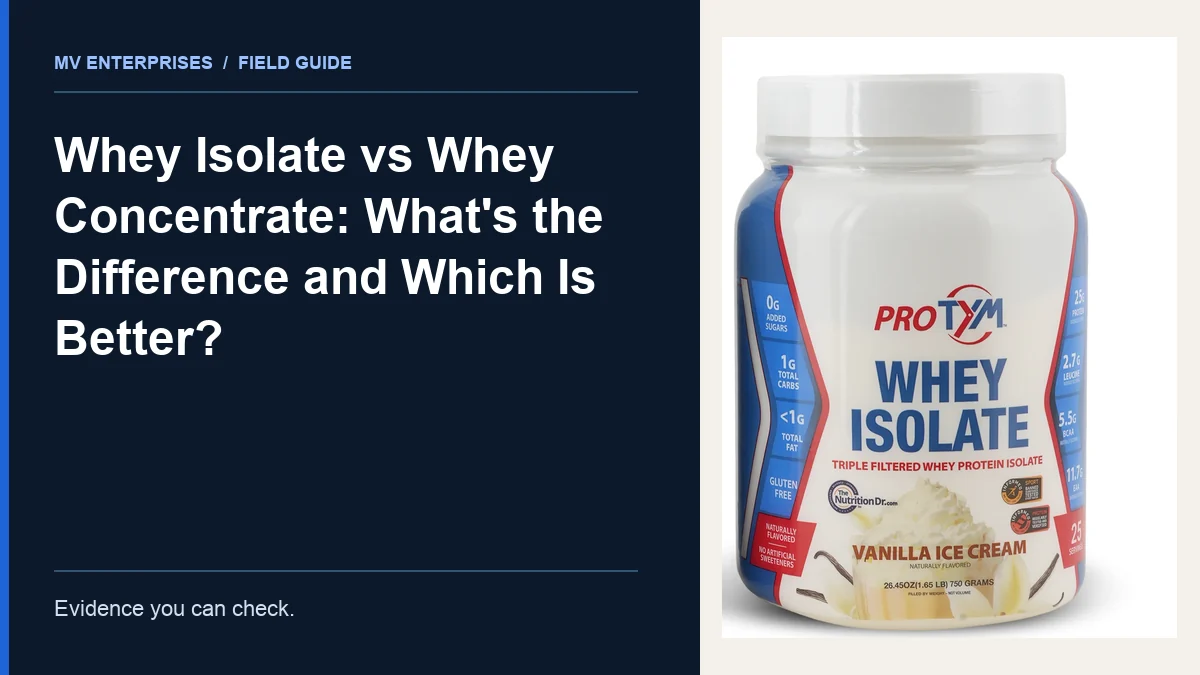
For example, ProTYM Whey Isolate lists 25g of protein per 30g serving and 0g of added sugar, and it includes Informed Sport and Informed Protein certification — the kinds of details you can check on any protein product before deciding whether it's right for you. For what that certification means in practice, see our guide to Informed Sport certified whey protein in India, and check ProTYM's batch documentation on our authenticity page.
This article is general educational information, not medical or dietary advice. ProTYM is imported and distributed in India by MV Enterprises.