
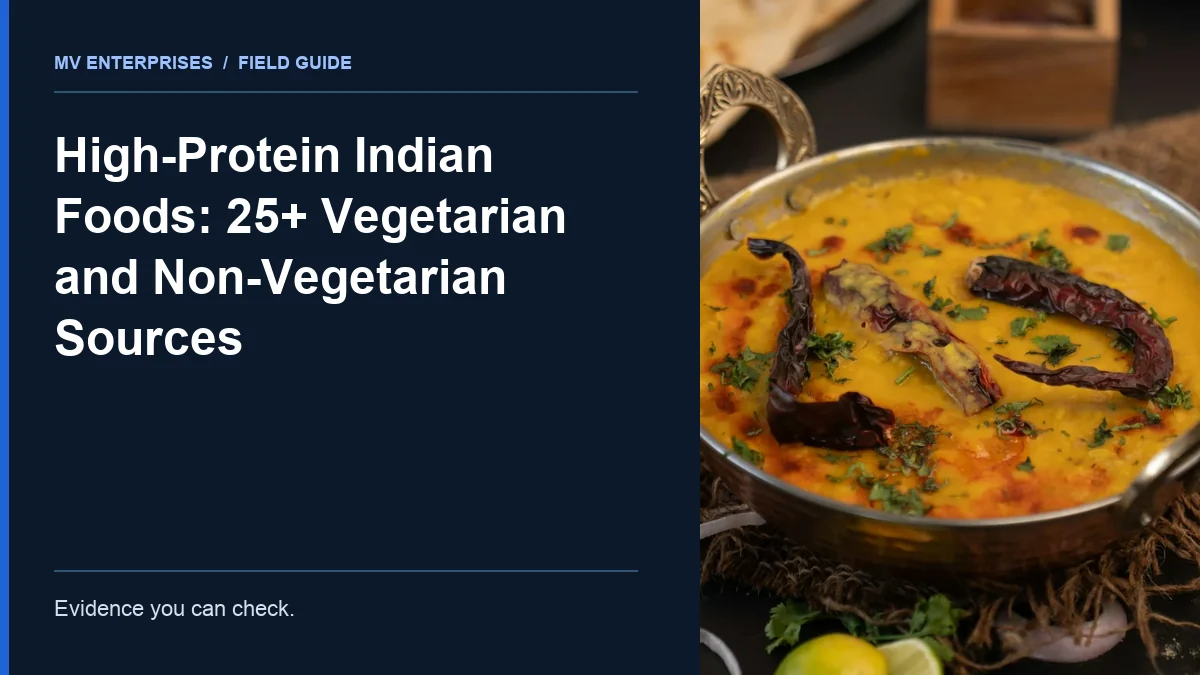
Eating more protein doesn't mean giving up the Indian food you already enjoy. Dal, rajma, chana, paneer, curd, soy, eggs, chicken, and fish are already part of most Indian kitchens, and all of them can help you get more protein without eating like it's a chore.
The real challenge is figuring out which foods actually give you a decent amount of protein, how much you're getting from a normal-sized serving, and how to fit them into meals you'd eat anyway. If you haven't worked out your daily target yet, start with our guide to how much protein you need.
What Counts as a High-Protein Food?
Don't judge a food purely by its protein-per-100g number. What actually matters is how much protein you get from the portion you're eating. Dal doesn't look impressive per 100g compared to something like paneer or soy chunks, but a full bowl of dal still adds up to a solid protein contribution.
25+ High-Protein Indian Foods
Vegetarian protein sources:
Soy-based foods: Soy chunks and tofu work in curries, bhurji, pulao, wraps, and stir-fries.
Dairy foods: Paneer, Greek yogurt, curd, and milk add protein without asking you to change what you're already eating.
Pulses and legumes: Dal, moong dal, masoor dal, rajma, chana, and black chana are staples that can add up to meaningful protein — as long as the portion is decent.
Other options: Besan, peanuts, peanut butter, nuts, and seeds work well in breakfasts and snacks.
| Food | Typical Serving | Approx. Protein |
|---|---|---|
| Soy Chunks | 50g dry | ~25g |
| Paneer | 100g | ~18–20g |
| Tofu | 100g | ~8–15g |
| Cooked Dal | 1 cup | ~8–10g |
| Rajma | 1 cup cooked | ~13–15g |
| Chana | 1 cup cooked | ~14–15g |
| Greek Yogurt | 200g | ~15–20g |
| Milk | 250 ml | ~8g |
Non-vegetarian options: Eggs are the simplest option — two eggs give you roughly 12–13g of protein. Chicken gives you roughly 25–30g per 100g cooked. Fish gives you roughly 20–25g per 100g cooked. Prawns give you roughly 20–25g per 100g cooked.
How to Build a High-Protein Indian Meal
Keep it simple: protein source + carbohydrate + vegetables + fat as needed. Rice, roti, dosa, and potatoes can stay exactly where they are — what needs to change is making sure a real protein source shows up on the plate.
Some examples: Dal + rice + curd. Rajma + rice + curd. Paneer + roti + vegetables. Eggs + roti + vegetables. Chicken + rice + vegetables.
Ask yourself one question before you eat: "Where's the protein in this meal?" That single habit does most of the work.
High-Protein Indian Breakfast Ideas
Besan chilla + curd. Moong dal chilla + curd. Eggs + roti. Paneer bhurji + roti. Tofu bhurji + roti. Greek yogurt + nuts or seeds.
High-Protein Indian Snacks
Roasted chana. Boiled eggs. Curd or Greek yogurt. Milk. Peanuts. Paneer cubes. Soy-based snacks.
Can Vegetarians Get Enough Protein?
Yes. A vegetarian diet can get you enough protein as long as you eat sufficient portions and mix up your sources. Variety and adequate portions are what actually matter.
Can You Get Enough Protein Without Protein Powder?
Yes. Whole foods can absolutely carry your entire protein intake. That said, busy schedules, training loads, or appetite issues can make it hard to consistently get enough protein from food alone. That's where a supplement earns its place — not as a necessity, but as a backup.
Where Does Whey Protein Fit?
Whey isn't there to replace dal, paneer, eggs, chicken, or fish. It's a convenient top-up when your regular meals fall short. ProTYM Whey Isolate, for example, gives you 25g of protein per 30g serving — useful when cooking another protein-rich meal isn't an option.
New to whey? Read our guide to whey protein for beginners and the difference between whey isolate vs whey concentrate before you choose a tub.
Bottom Line
Eating a high-protein Indian diet doesn't mean giving up your usual food. Start by adding a clear protein source to the meals you already eat. If that's still not enough, a whey supplement can help close the gap.
Whichever supplement you choose, check its batch documentation first. For ProTYM, that is published on our authenticity page.
This article is general educational information, not medical or dietary advice. ProTYM is imported and distributed in India by MV Enterprises.